What are Same Day Crowns? | CEREC Services in St. George, UT

Same Day Crowns: What Does a Damaged Tooth Actually Need?
Imagine biting into a chip and feeling a tooth shift in a way it never has before. Or, during a cleaning, your hygienist points out a crack extending from an old filling and mentions a crown. Both situations raise the same questions: What does that mean, and how do we fix it, and how long will treatment take?
A crown covers a tooth completely, restoring its shape and protecting the remaining structure from further damage. Many crowns can be completed in one appointment. At Plumb Dental, Dr. Plumb, Dr. Woodbury, and the team use CEREC technology to design and mill ceramic crowns in our St. George office. In suitable cases, that means leaving with a permanent crown the same day, without a temporary restoration or a second appointment.
But a crown is only one way to repair a damaged tooth, and same-day milling isn't right for every situation. Here's what to know about your options, how we determine what a tooth needs, and what to expect from treatment. You can explore our general dentistry services, schedule a visit, or call (435) 673-9606 with questions.
Quick Takeaways
- Crowns protect weakened teeth. They cover the tooth when damage, decay, or a large filling leaves it vulnerable to fracture.
- Not every damaged tooth needs a crown. Fillings, bonding, inlays, and onlays may be appropriate when enough healthy tooth structure remains.
- Same-day crowns can save time. CEREC technology allows many ceramic crowns to be designed, milled, and placed in one appointment.
- The best restoration depends on the tooth. Its condition, location, bite forces, and cosmetic requirements all influence the treatment plan.
- Some teeth need treatment first. Root canal therapy, gum treatment, or a buildup may be necessary before a crown can be placed.
- Crowns still need care. Daily brushing and flossing, regular checkups, and a nightguard when recommended can help protect your restoration.
What Is a Dental Crown, and What Does It Actually Do?
A tooth's outer walls help it withstand the force of chewing. Decay, cracks, and large fillings can weaken those walls until a traditional filling no longer provides enough support. Each bite may put additional pressure on the weakened areas, increasing the risk of fracture.
A crown covers the tooth's visible portion, distributing chewing forces across the restored structure and helping hold the remaining tooth together.
Two distinctions are especially important:
- A crown is not a filling. A filling replaces damaged material within a tooth and works well when enough healthy structure remains. A crown covers the tooth when more extensive reinforcement is needed.
- A crown is not a veneer. A veneer is a thin covering bonded to the front of a tooth, usually to improve its appearance. A crown provides full coverage and structural support. If appearance is your primary concern, cosmetic dentistry options may be a better starting point.
Crowns can restore molars, front teeth, teeth that have undergone root canal treatment, and restorations placed on dental implants. In each case, the goal is to restore function, shape, and protection.
Why Teeth Need Crowns in the First Place
A tooth rarely needs a crown without a reason. Common causes include decay, fractures, excessive wear, and damage from previous dental work.
Decay that has outgrown filling territory
A small cavity may need only a filling. But decay can spread beneath an old restoration or across a chewing surface, leaving too little healthy tooth to support another filling. Regular checkups and cleanings help identify these changes before the damage becomes more extensive.
Cracks and fractures
A tooth can crack from biting something hard, an injury, or years of clenching. Some shallow enamel lines need only monitoring, while deeper cracks may continue to spread. When the remaining tooth can be saved, a crown may help stabilize it.
Grinding and clenching
Bruxism, or habitual grinding and clenching, places repeated stress on teeth. Over time, this can flatten chewing surfaces, chip edges, and weaken teeth until they fracture.
Acid erosion
Stomach acid from reflux, frequent acidic drinks, and dry mouth can gradually wear away enamel. Because erosion often affects broad surfaces rather than creating one isolated cavity, severely worn teeth may need more extensive restoration.
Large old fillings
Large fillings leave less natural tooth to support the restoration. As the surrounding structure weakens, replacing an old filling with another filling may not provide enough protection. If an older restoration concerns you, ask us about it at your next visit.
Teeth after root canal treatment
A root canal treats inflamed or infected tissue inside a tooth. The remaining tooth may still be weakened by the original damage and the access needed for treatment. Back teeth, which absorb substantial chewing forces, often need crowns to reduce the risk of fracture.
Signs Your Tooth May Need a Crown
Some crowns are recommended during routine exams before a tooth hurts. Others follow noticeable symptoms, such as:
- Sharp pain when biting down or releasing pressure
- Cold sensitivity that lingers
- A rough edge or a piece of tooth that has broken off
- A visible crack or darkened area
- Food repeatedly getting trapped in the same spot
- A loose filling or floss that catches or shreds around a tooth
Symptoms alone don't determine whether you need a crown. We examine the tooth and its surrounding structures to understand the extent of the damage.
Visual exam and photographs
We examine the tooth under good lighting and magnification. Intraoral photographs can help you see the crack, worn area, or failing restoration we're discussing.
X-rays
X-rays can reveal decay beneath fillings, show how close damage is to the nerve, and help evaluate the bone around a tooth's roots. Many cracks don't appear on X-rays, so imaging is only one part of the assessment. If the nerve is affected, root canal treatment may be needed before a crown.
Bite evaluation
We check how your teeth meet and move against each other. If one tooth absorbs excessive force, restoring it without addressing the underlying bite problem may leave it vulnerable to further damage.
Cracked-tooth testing
We may test individual cusps by having you bite on a small instrument, check the tooth's response to cold, or gently tap it. These tests can help identify the source of pain and determine whether the nerve may be involved.
When watching and waiting is reasonable
Not every crack, worn surface, or aging filling needs immediate treatment. A shallow craze line, mild wear without symptoms, or an intact filling may be documented and monitored.
We'd rather recommend observation when it's appropriate than restore a tooth unnecessarily. However, a tooth that is actively cracking or painful under pressure deserves prompt evaluation because the damage may progress. If a tooth breaks or suddenly becomes painful, call (435) 673-9606.
Ways to Restore a Damaged Tooth
A crown is one option among several. The right treatment depends on how much healthy tooth remains and what the restoration needs to accomplish.
Fillings
Tooth-colored composite or amalgam repairs a cavity directly in one visit. Fillings are best for small to moderate areas of damage when the remaining tooth walls are strong enough to support them.
Bonding
Composite material can rebuild a chipped edge or close a small gap. Bonding is conservative and often used for cosmetic improvements, but it may not withstand heavy chewing forces as well as a more extensive restoration. It's frequently used when the tooth is otherwise healthy and only its shape needs improvement.
Inlays and onlays
These custom restorations fit into a tooth's chewing surface or cover one or more cusps. They can reinforce a damaged tooth while preserving more natural structure than a full crown. Whether one is suitable depends on the tooth's remaining shape and strength.
Full crowns
A crown covers the tooth completely. It's often recommended when substantial structure is missing, a crack needs stabilization, or a tooth needs additional protection after root canal treatment.
Root canal plus crown
If the inner tissue is infected or irreversibly inflamed, root canal treatment may be necessary before restoring the tooth with a crown.
Extraction with a replacement
Sometimes damage is too extensive for a predictable repair. Removing the tooth and discussing replacement isn't a failure; it may be the most appropriate way to protect your oral health. Dental implants are one possible replacement option.
The goal is to preserve as much natural tooth as reasonably possible while providing enough strength for everyday function. Dr. Plumb or Dr. Woodbury can explain where your tooth falls within these options before treatment begins. You can also call (435) 673-9606 with questions.
Same Day Crowns Explained
CEREC technology allows many crowns to be designed and milled during a single appointment instead of requiring a temporary crown and a separate visit for placement.
1. Preparing the tooth
We numb the tooth, remove decay or the failing restoration, and shape the remaining structure to accommodate the crown. If dental anxiety is a concern, ask about our sedation options.
2. A digital scan
A handheld scanner captures the tooth and nearby structures to create a three-dimensional digital model. This replaces the traditional impression material used in many crown procedures.
3. Designing the crown on screen
The software generates a proposed crown design, which the dentist refines for shape, contact with neighboring teeth, and how the crown meets the opposing teeth when you bite.
4. Milling it in the office
The design is sent to an in-office milling unit, which carves the crown from a ceramic block selected to match the tooth. Milling typically takes around 15 to 20 minutes, though timing can vary.
5. Fit, adjust, bond
We check the crown's fit, margins, appearance, and bite, making adjustments as needed. Once everything is satisfactory, the crown is bonded in place and your bite is checked again.
To find out whether a same-day crown is appropriate for you, schedule a visit with Dr. Plumb or Dr. Woodbury at our St. George office.
Same Day Crowns vs. Lab-Made Crowns
Same-day crowns offer convenience, but lab-made crowns remain valuable. Each approach has advantages, and the best choice depends on the tooth and the restoration required.
Appointments and temporaries
A CEREC crown is generally completed in one longer appointment. A lab-made crown usually requires two visits, with a temporary crown worn between them. Same-day treatment eliminates the need to manage a temporary or return for placement.
Materials available
Same-day crowns are milled from ceramic blocks suitable for many restorative situations. Dental laboratories can provide a broader range of materials and fabrication techniques, including certain zirconia, porcelain-fused-to-metal, and gold restorations.
Shade matching and layering
Milled crowns are designed to match the surrounding teeth, but they use a ceramic block rather than individually layered porcelain. A skilled dental ceramist can layer shades and translucency to reproduce subtle details of natural teeth. For a prominent front tooth where appearance is especially demanding, a lab-made crown may be preferable. Some cosmetic cases benefit from that approach.
Accuracy
Digital scans can avoid some issues associated with physical impressions, such as distortion or movement while the material sets. Both digital and traditional workflows can produce excellent results. The quality of the tooth preparation, design, and final fit matters whichever method is used.
When a lab crown is still the better recommendation
- A front tooth requiring highly detailed shade matching
- A heavily loaded molar that may benefit from a particular high-strength material
- A case where gold or porcelain-fused-to-metal is appropriate
- Multiple crowns being made together as part of a complex bite restoration
- An implant restoration requiring specific coordination with the underlying implant components
Who Is a Good Candidate for a Same Day Crown?
Many patients who need a crown can receive one in a single visit. Several factors help determine whether that's the best approach.
Where the tooth sits
Premolars and molars are often good candidates because they handle substantial chewing forces and usually have less demanding cosmetic requirements than front teeth. Front teeth can also receive same-day crowns, but the shade match and surrounding tooth characteristics may make a lab-made restoration preferable.
How much tooth is left
A crown needs enough remaining structure to support it. If little tooth remains, we may need to rebuild the foundation first. A tooth that has undergone root canal treatment may need additional support, depending on its condition.
Gum health
Healthy gums help create a stable, clean margin around the crown. Active gum disease or significant inflammation may need treatment before a definitive restoration is placed.
Bite force and grinding
Clenching and grinding affect both material selection and aftercare. A nightguard may be recommended to reduce excessive force on the new crown.
Cosmetic expectations
Tell us if you have specific expectations for the appearance of a visible tooth. That may influence the crown material, the fabrication method, or whether broader smile planning would be useful.
What gets treated first
Untreated decay, an infected nerve, or a bite problem contributing to the damage may need attention before the final crown. If you're currently in pain, emergency dental care can help address the immediate problem while we plan the appropriate restoration.
What to Expect During Your Crown Appointment
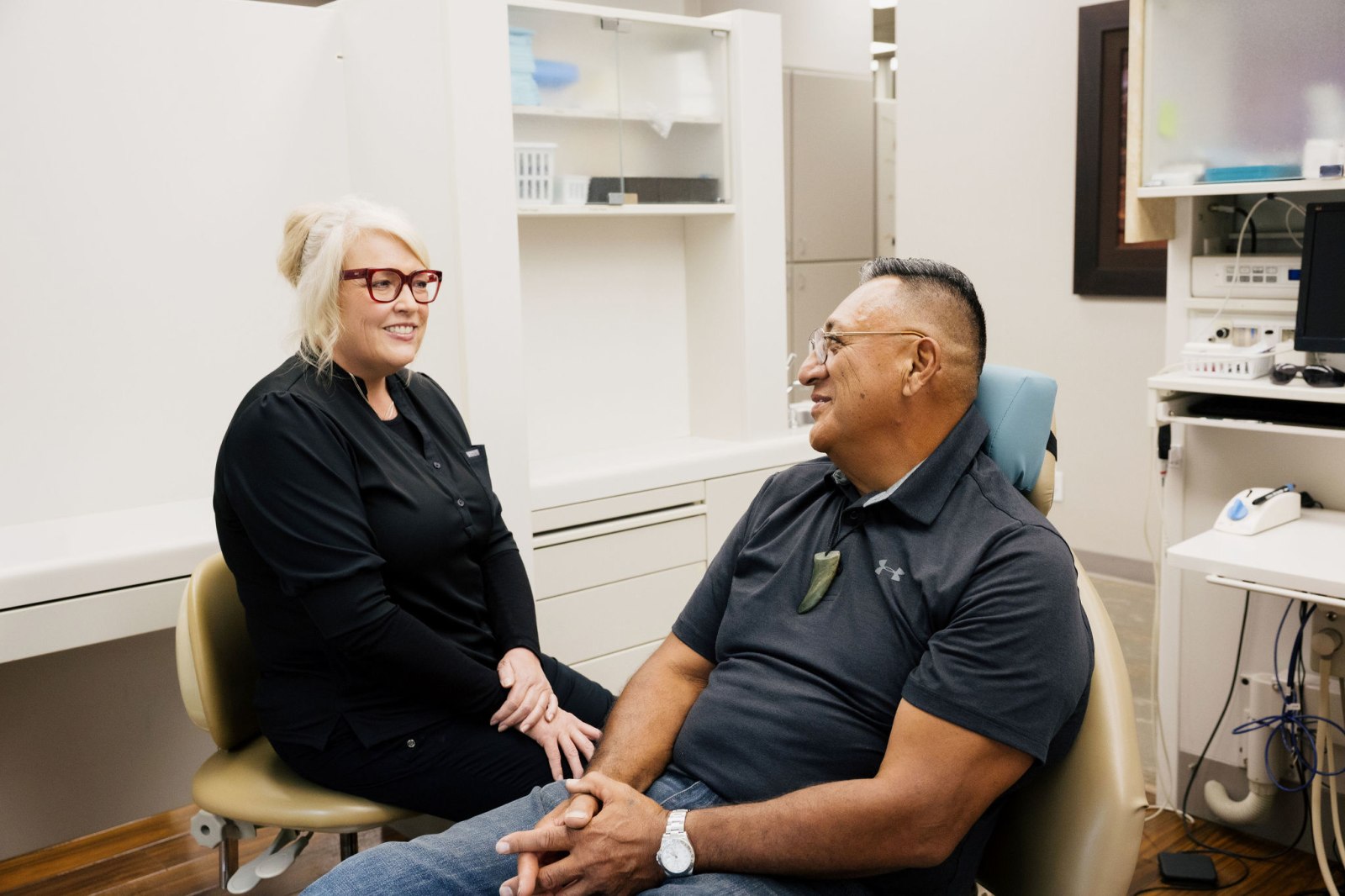
A same-day crown appointment typically takes a couple of hours, depending on the tooth and the complexity of the case. You can usually eat beforehand. We numb the area, prepare the tooth, scan it, and design the restoration. While the crown is being milled, you can relax before we return to check the fit and bond it in place.
Dr. Plumb has advanced training in sedation, which is available for patients who need additional help managing dental anxiety. If you've avoided treatment for years because of fear or embarrassment, you're welcome here. We'll focus on your needs, not how long it's been since your last visit.
After treatment, the numbness generally wears off over a few hours. Avoid chewing until you can feel your mouth normally again. Your bite may feel slightly unfamiliar at first, but persistent discomfort or a sensation that the crown is too high should be checked.
Aftercare, Sensitivity, and Making a Crown Last
Some sensitivity to cold or pressure is common for a short time after crown placement, particularly when the tooth was deeply decayed or the preparation was close to the nerve. Symptoms should gradually improve. Worsening pain, a persistent ache, or a bite that feels uneven warrants a call to (435) 673-9606. A simple adjustment may resolve discomfort caused by a high bite.
To care for your crown:
- Brush and floss daily. The crown itself can't develop a cavity, but the natural tooth underneath it can, particularly near the crown's edge.
- Avoid excessive force. Chewing ice, hard candy, and popcorn kernels can damage crowns and natural teeth.
- Wear your nightguard if recommended. It helps protect the crown from excessive grinding forces.
- Keep regular checkups. During preventive visits, we assess the crown's margins, your bite, and the surrounding gums.
How long a crown lasts depends on factors such as oral hygiene, bite forces, diet, and routine care. No restoration lasts forever, but appropriate maintenance can help extend its service life.
When a Crown Isn't the Answer
Sometimes the damage is too extensive for a crown to provide a predictable result. In those cases, we explain why saving the tooth may not be possible and discuss alternatives.
Fractures below the gum or into the root
A crown may stabilize a crack in the part of the tooth above the gumline. If the fracture extends deeply into the root, the tooth may not be restorable.
Not enough tooth to build on
Severe decay that extends to or below the gumline can leave too little healthy structure to support a crown. Additional procedures may help in some cases, but extraction may be necessary in others.
Advanced bone loss
A crown cannot replace the bone and gum support a loose tooth has lost. Depending on the extent of the damage, gum treatment or tooth replacement may be the more appropriate option.
A root canal that hasn't healed
If a tooth remains infected after root canal treatment, retreatment, surgery at the root tip, or extraction may be considered. Placing a new crown without addressing the infection won't resolve the underlying problem.
The extraction-to-replacement pathway
After a tooth is removed, nearby teeth may shift, the opposing tooth may move into the gap, and the jawbone in that area can gradually shrink. Replacement options include a dental implant, a fixed bridge, or a removable partial denture. Some patients need bone grafting before an implant can be placed.
What Crowns Cost in St. George, and How Insurance Handles Them
Same-day and lab-made crowns can fall within similar price ranges. The final cost depends on the treatment needed, the material selected, and the complexity of the restoration. Same-day treatment may also save time and travel by eliminating a second appointment.
Factors that affect cost include:
- The crown material and complexity of the case
- Additional treatment, such as root canal therapy or a buildup
- Whether one tooth or several teeth are being restored, including as part of a full smile makeover
- Whether sedation is included
Plumb Dental is a fee-for-service practice and can bill insurance as a courtesy for patients who have coverage. Many dental plans classify crowns as major restorative care, but the percentage covered, deductible, annual maximum, and other limitations vary by plan.
We can review your specific benefits and provide a written estimate before treatment so you have a clearer understanding of your expected costs.
If cost has caused you to postpone treatment, let us know. Addressing a problem earlier may help prevent more extensive and expensive treatment later. We can discuss your priorities and whether treatment can be planned in stages. Call (435) 673-9606 to talk through your options.
How Crowns Fit Into Your Long-Term Dental Health
A crown repairs a damaged tooth, but understanding why the damage happened can help protect your other teeth. Long-term care may include:
- Prevention. Regular cleanings and exams can identify decay while it still needs a smaller restoration.
- Gum health. Healthy gum tissue and supporting bone help protect natural teeth and restorations. Treating gum disease can address problems that threaten that support.
- Bite and jaw function. If uneven bite forces or clenching contributed to the damage, addressing those factors can help reduce stress on the crown and other teeth.
- Cosmetic goals. Replacing a damaged tooth may also be an opportunity to discuss tooth shade, worn edges, or alignment.
- Overall health. Oral health affects everyday activities such as eating comfortably and sleeping well. Treating dental disease is about function and well-being, not appearance alone.
If a Tooth Has Been Bothering You, Come Let Us Look
Whether you already know you need a crown or you've been chewing on one side and hoping the discomfort will pass, we'd be glad to evaluate the tooth and explain what we find. Sometimes treatment is necessary; other times, monitoring is enough.
Plumb Dental is located at 427 W 100 South in St. George, where Dr. Plumb, Dr. Woodbury, and our team care for local families. Call (435) 673-9606 or request an appointment. Even if it's been years since your last visit, you're welcome to start here.
We can’t wait to meet you
Call (435) 673-9606 or request an appointment online to set up your first visit. We’ll be in touch soon.
Schedule an appointment
