Considering Dental Implants? 7 Questions to Ask Your Dentist First
A dental implant replaces a missing tooth starting at the root. A small titanium post is placed into the jawbone, and a custom crown sits on top of it. That crown bites, cleans, and looks just like the tooth you lost. It is a big decision, and before you commit, there are seven questions worth asking out loud. The answers should be specific to your mouth, not pulled from a pamphlet.
Dr. Plumb and Dr. Woodbury place and restore implants right here in St. George, so you do not have to travel out of the area to get experienced, personalized care. Bring your questions with you. Call us at (435) 673-9606 and we will get you set up for a consultation.
Quick Takeaways
- Find out who places the implant post and who puts the crown on top. When both happen at the same office, your care stays consistent from the first appointment to the last.
- Ask to see your own X-rays or scans. The height and width of your jawbone determine whether an implant can be placed now, after some healing time, or only after a bone graft to rebuild the area first.
- Expect the full process to take several months. Most of that time is your body healing and the implant fusing with the bone, not time spent in the dental chair.
- Ask for a written cost breakdown that covers every step: the surgical placement, the abutment (the small connector piece), the crown, and any prep work like an extraction if the tooth hasn't been removed yet.
The 7 Questions Worth Asking
These are the questions we're happiest to answer, and the ones that tend to change how a patient feels about moving forward. Ask them of us or of any dentist you're considering. A good dentist will welcome every single one.
1. Am I actually a candidate right now?
An implant needs two things to succeed: enough bone in the jaw to anchor the titanium post, and healthy gum tissue around it. When a tooth is lost, the bone underneath it gradually shrinks because there's no longer a root stimulating it. That's why timing matters more than most people expect. If gum disease is active, that needs to be treated first before any implant work begins. Ask your dentist to pull up your scan and walk you through exactly what they're seeing.
2. Will I need a bone graft or sinus graft first?
If the jawbone has shrunk too much to support an implant, a bone graft can help. The graft material acts as a scaffold, holding space while your own cells grow in and rebuild the area. A sinus graft does something similar for the upper jaw, where the sinus cavity can sit close to where the implant needs to go. Either one adds months to the overall timeline, so it's important to know upfront whether this step is part of your plan. A "not yet" is very different from a "no."
3. Who places the implant, and who puts the crown on it?
These are actually two separate steps, and at many practices, they happen at two different offices. The surgeon places the post; a restorative dentist designs and fits the crown on top. When those two providers aren't talking to each other closely, details about the final result can get lost. At Plumb Dental, we handle both steps in house, so the same team that plans your implant is the one that finishes it.
4. How long will the whole thing take, start to finish?
Don't settle for a single number. Ask your dentist to walk you through the milestones: the placement appointment, the healing period while your bone grows around the post (a process called osseointegration), the abutment visit where a small connector piece is attached, and finally the crown. Most of the time involved is healing, not time in the chair. Also ask what happens to the gap in your smile while you wait, because that's a practical concern most patients have.
5. What are my options if I'd rather not have surgery?
Surgery isn't the right fit for everyone, and that's okay. A fixed bridge or a denture may be a reasonable path depending on which tooth is missing, the condition of the surrounding teeth, and what matters most to you. If anxiety about dental visits is part of the picture, ask about sedation options as well. A dentist who won't talk through the alternatives isn't giving you a real choice.
6. What does the total cost include?
Implant pricing can vary a lot depending on what's included. Ask for a written breakdown that lists every component: the surgical placement, the abutment, the crown, and any prep work like an extraction or bone graft. Having it all in one document makes it much easier to compare what different offices are actually offering, rather than comparing one number to another without knowing what's in each.
7. What will I need to do to keep it healthy?
Here's something that surprises a lot of patients: an implant itself can't get a cavity, because it's titanium, not tooth structure. But the gum tissue and bone around it can still get infected, a condition called peri-implantitis. Ask your dentist what your daily home care routine should look like and how often you'll need to come in for professional cleanings to keep everything healthy for the long haul.
How the Implant Process Works
For most patients, the waiting between appointments is harder than any single visit. Once you know what to expect at each step, the whole thing feels a lot more manageable.
Consultation and imaging
We start by taking detailed images of your jaw. These let us measure the available bone, locate the nerves and sinuses nearby, and map out exactly where the post needs to go. Getting this right at the start is what makes everything else predictable.
Placement of the post
The area is numbed thoroughly before anything happens. Then the small titanium post is placed directly into the jawbone where the missing tooth used to be. Most patients tell us it was a shorter, quieter appointment than they had imagined. If dental visits make you anxious, oral or IV sedation are both options we can build into your plan.
Healing and integration
This is the phase that takes the most time, and it's also the most important one. Your jawbone gradually grows around and through the surface of the titanium post, bonding with it until the two are essentially one structure. Dentists call this osseointegration, which just means the implant and the bone have fused together. That bond is what gives an implant its strength and stability, and it simply cannot be rushed.
Abutment
Once we confirm the implant has fully integrated, we attach a small connector piece called an abutment. Think of it as the link between the post in your bone and the visible tooth on top. It's a straightforward appointment, and it sets the stage for the final step.
The crown
Your custom crown is shaped and shaded to match the teeth beside it. Once it's in place, you chew on it, floss around it, and go about your life. Most patients tell us they stop thinking about it pretty quickly. Dr. Plumb and Dr. Woodbury handle every step of this process right here in our St. George office.
Why Patients Choose Implants
- Nothing shifts. There's nothing to take out at night and nothing that slides when you're eating corn on the cob at a family barbecue. It stays put because it's anchored directly into your jawbone, just like a natural tooth root.
- The neighboring teeth are left alone. A bridge has to be anchored to the teeth on either side of the gap, which means reshaping healthy enamel to make room. An implant stands completely on its own, so the teeth next to it don't have to be touched.
- It keeps your jawbone active. When a tooth is lost, the bone underneath it gradually shrinks because there's no longer a root stimulating it. An implant post sits in the bone and provides that stimulation again, which helps slow that process down.
- It blends in. The crown on top is matched in shade and shape to the teeth beside it. Most people won't be able to tell which one it is, and neither will you after a while.
- They're made to last. With daily brushing, flossing, and regular cleanings, implants can last for decades. The post itself is titanium, which the body tolerates very well and which doesn't decay the way a natural tooth can.
Why Patients Trust Plumb Dental With Implant Work
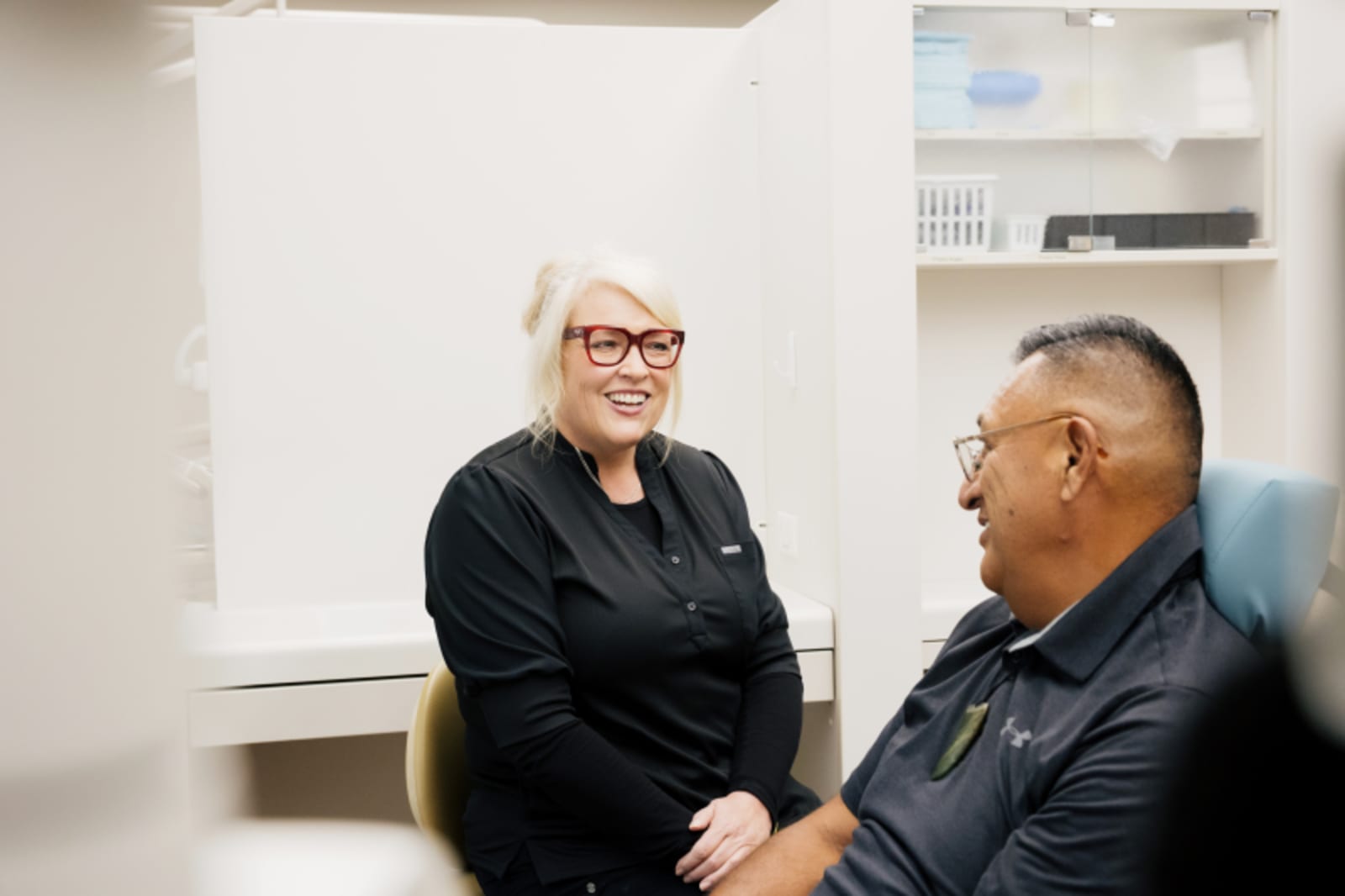
Dr. William J. Plumb, DDS has advanced training in implantology, hard and soft tissue surgery, cosmetics, and sedation dentistry. Dr. Spencer Woodbury, DDS earned his DDS at Creighton University and is proud to carry on his father's legacy in dentistry. He is fluent in Spanish, has provided dental care on humanitarian missions in Central and South America, and has a real passion for advanced procedures and the latest dental technology.
Together, they look at your case from both angles: the surgery itself and the final result you'll live with. We'll walk you through the biology, show you your own images, and answer every question you have, including the ones you weren't sure were okay to ask. And we won't say a word about how the tooth was lost.
Frequently Asked Questions
Does getting an implant hurt?
Honestly, most patients tell us the procedure was easier than they were expecting. The area is numbed thoroughly before anything begins, and any soreness afterward is usually mild and fades within a few days. If dental visits make you anxious, just mention it when you call. Dr. Plumb has advanced training in sedation dentistry, so we have real options for patients who need a little extra help relaxing.
How long do dental implants last?
The titanium post that goes into your jawbone is built to last decades, and many patients keep theirs for life. The crown on top takes the daily wear of chewing, so it may need to be replaced at some point down the road, much like a crown on a natural tooth. With good home care and regular cleanings, the whole restoration holds up very well over time.
Can I get an implant if I've already lost bone?
Often, yes. When a tooth is missing for a while, the jawbone in that area can shrink because it no longer has a root stimulating it. If there isn't quite enough bone to support an implant right now, a bone graft can rebuild the site first. We would need to look at your imaging to tell you exactly where things stand and what the path forward looks like for you specifically.
Will there be a gap while the implant heals?
In many cases, yes, a temporary tooth can be placed so you are not walking around with an obvious space. Whether that works for you depends on which tooth is missing and how your bite fits together. It is worth asking about at your consultation so we can plan for it from the start.
What happens if I just leave the space alone?
More than most people realize. Without a root in place, the jawbone underneath the gap gradually shrinks over time. The teeth on either side can also start to drift into the open space, which shifts your bite and can make future treatment more complicated. The sooner we take a look, the more options you have.
Come Ask Us Your Seven Questions

Bring your list and we'll go through it together. We'll take the imaging we need to get a clear picture of your bone, then walk through each question with the scans right there on the screen so you can see exactly what we're looking at. You'll leave with a written treatment plan you can read over at home, and it will include alternatives, not just one path forward. If implants turn out not to be the right fit for you, we'll tell you honestly and talk through what else might work.
Call us at (435) 673-9606 to set up a time, or learn more about Dr. Plumb and Dr. Woodbury before you come in. We're happy to answer questions before you ever sit in the chair.